
This creates an unbroken path of verified integrity from hardware power-on to operating system load and beyond. Utilizes safe measurement capabilities via root of trust for measurement (RTM) to cryptographically hash boot parts, verifying the whole boot chain’s integrity and reporting any deviations. Whereas it is possible to implement a root of belief in software program, it’s generally thought-about insufficient for high-security environments. This is as a end result of a software-based RoT resides in the same reminiscence area as the potential threats it is designed to detect, making it vulnerable to the same exploits that compromise the working system.
Every secure system wants an anchor — a component that’s trusted unconditionally because everything else’s trustworthiness is determined by it. In fashionable SoC design, this anchor is the Hardware Root of Belief (HRoT). It’s the first thing that executes when energy is utilized, and its integrity determines whether or not anything that follows could be believed. Secure boot does nothing to cease them, as a end result of by then its work is complete. Defending towards these threats requires the working system’s own protections together with safety instruments similar to endpoint detection, community controls, and entry management.
Hardware Root Of Belief Vs Software Program Root Of Belief
A TEE running on a system without Secure Boot offers no real assure — the TEE firmware itself could presumably be https://365eventcyprus.com/how-to-monetize-instagram-and-find-advertisers-using-an-online-platform.html compromised. Safe Boot with no hardware RoT means the verification keys could possibly be tampered with. Once the system has booted securely, sure operations need ongoing safety throughout runtime — cryptographic key operations, biometric processing, DRM, safe payments.
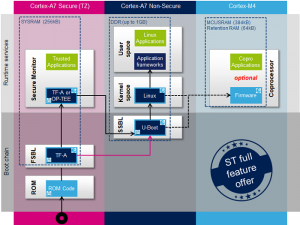
How A Root Of Belief Works: The Chain Of Trust
When the kernel has been verified, the firmware hands control to the operating system, and secure boot has carried out its job. The system has started using only software program whose signatures had been validated at each stage, so the working system begins from a identified and trusted state. Accountability for security then passes to the operating system and the instruments operating on it. The similar capabilities that safe the boot course of can also safe the software-update process, maintaining systems in the field from being tricked into accepting malicious updates. Software Program updates can be delivered through an encrypted tunnel utilizing our processor’s network encryption hardware or delivered in the clear with an connected digital signature validated by our processor. Both mechanism can serve as proof that the update is trustworthy and subsequently executable.
Stage 3: Measured Boot And Remote Attestation
- An side of a system is taken into account secure on the tacit assumption that another facet is secure, which in turn is dependent upon the security of one more aspect.
- Payment HSMs defend the keys behind PIN encryption, card transaction processing, and payment community communication.
- NXP processors provide monotonic-counter and key-revocation options to detect de-authorized older revisions of software program and block their execution.
- Safe boot provides restricted protection in opposition to an attacker who has bodily access to a device or who has gained administrative management of it.
- Trusted platform modules (TPMs) are standardized by the Trusted Computing Group and embedded directly into laptops and servers.
In environments that depend on trusted startup, the basis of trust must be treated as a high-value assurance dependency, not a checkbox. If it is absent or weak, later controls such as attestation, device trust, and posture evaluation lose a lot of their evidentiary worth. Platform roots of belief fail when the anchor is too simple to alter, when firmware protections are bypassed, or when the trust path assumes components are reliable before they have been verified.
Someone with sufficient entry might be able to disable safe boot, enroll their own keys so that malicious software program passes verification, or otherwise reconfigure the protection. The chain of belief continues into the parts that load the operating system itself. The verified firmware checks the bootloader, this system liable for beginning the operating system. On many Linux techniques this could be a small first-stage loader referred to as shim, which verifies a second-stage loader corresponding to GRUB, which then verifies the kernel. The Chain of Belief is a sequential verification course of in which every system component is authenticated by a beforehand trusted component earlier than it runs.
Validation against the Federal Data Processing Standard (FIPS) and Frequent Criteria means they meet the peace of mind requirements regulated industries depend on. Software-based key storage nonetheless has a place in improvement environments and low-sensitivity workloads, together with methods the place hardware deployment is not possible. Organizations should scope those exceptions deliberately and hold regulated and high-value knowledge on hardware. An attacker who features elevated entry to such a bunch can read the important thing immediately. That identical attacker facing a hardware-based root of belief can not extract the key, as a outcome of it never enters host memory.
Leave a Reply